top of page
5 hours ago0 min read
Tritirachium album: Biology, Proteinase K Production, and Scientific Importance
Tritirachium album is a species of microscopic fungus best known for producing proteinase K, a powerful protein-degrading enzyme that has become an important tool in molecular biology, biotechnology, and biochemical research. Originally described by Limber in 1940, the organism attracted scientific interest because of its ability to secrete enzymes capable of breaking down a wide range of proteins, including keratin, a tough structural protein found in hair, skin, feathers, a
11 hours ago13 min read
ATP-Powered Ion Pumps Coupled to Artificial Membranes and Electrodes: Principles, Design, and Applications
ATP-powered ion pumps coupled to artificial membranes and electrodes represent an important area of research at the intersection of biochemistry, bioengineering, nanotechnology, and electronics. These systems aim to convert chemical energy stored in adenosine triphosphate (ATP) into an electrical output by using biological proteins to transport charged particles across a membrane. Unlike conventional batteries, which rely primarily on electrochemical reactions involving inorg
1 day ago10 min read
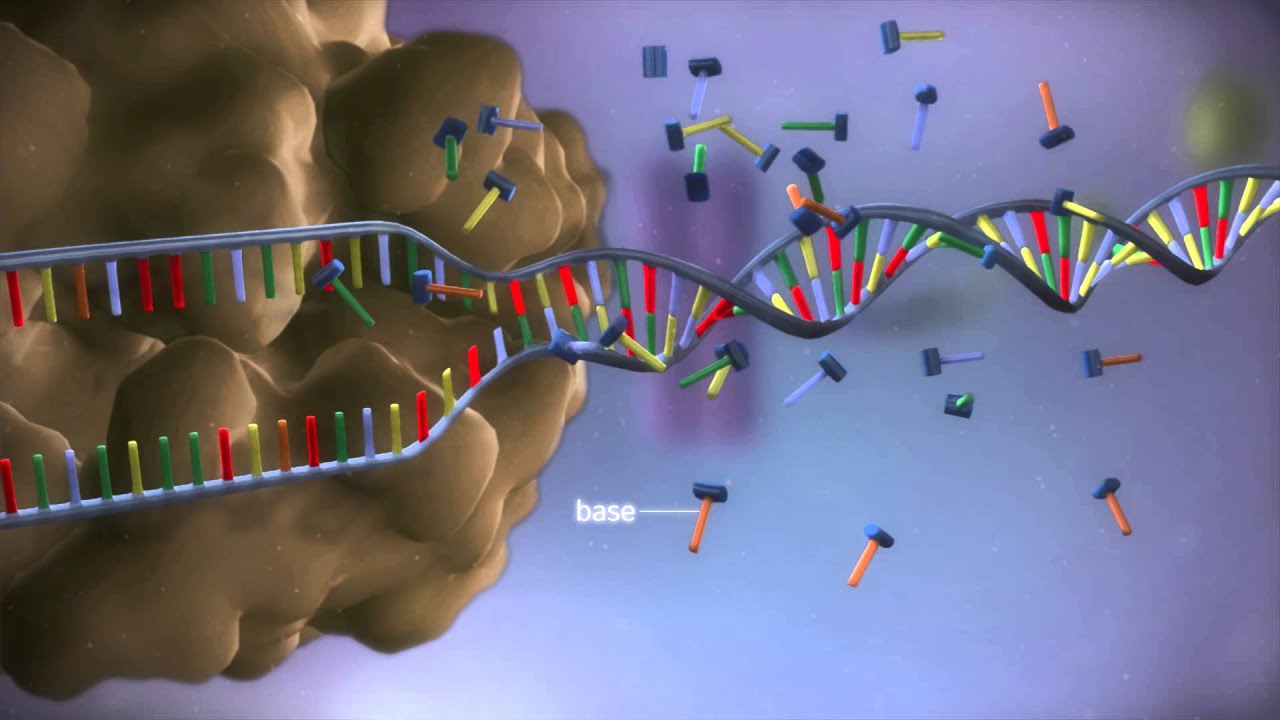
Transcription and Translation: The Molecular Processes of Gene Expression
Transcription and translation are two fundamental biological processes that allow genetic information stored in deoxyribonucleic acid (DNA) to be converted into functional proteins. Together, these processes form the central pathway of molecular biology, commonly described as the central dogma of molecular biology. Genetic information is generally transferred from DNA to ribonucleic acid (RNA) through transcription and then from RNA to protein through translation. Proteins pr
1 day ago14 min read

ATP Synthase: Structure, Function, Mechanism and Biological Significance
ATP synthase is one of the most important molecular machines in living organisms. It is a specialised enzyme complex responsible for producing adenosine triphosphate (ATP), the principal energy-carrying molecule used by cells to power a wide variety of biological processes. These processes include muscle contraction, active transport across cellular membranes, DNA replication, protein synthesis, cell division and the maintenance of cellular organisation. ATP synthase is remar
2 days ago10 min read
Lipase: Structure, Function, Mechanisms, and Applications in Biology, Medicine, and Biotechnology
Lipases are a diverse group of enzymes that catalyse the hydrolysis of lipids, particularly triglycerides, into smaller molecules such as fatty acids and glycerol or partial glycerides. They play essential roles in the digestion, absorption, transport, metabolism, and storage of fats in living organisms. Lipases are found in humans, animals, plants, bacteria, fungi, and other microorganisms, reflecting the fundamental importance of lipid metabolism throughout the biological w
3 days ago14 min read
Alpha-Amylase: Structure, Function, Catalytic Mechanism, Biological Significance, and Industrial Applications
Alpha-amylase is an important enzyme that catalyses the hydrolysis of internal α-1,4-glycosidic bonds in starch and related carbohydrate molecules. It plays a central role in carbohydrate digestion, energy metabolism, food processing, biotechnology, and numerous industrial applications. Starch, the principal carbohydrate storage molecule in plants, consists primarily of two glucose polymers: amylose, which is predominantly linear, and amylopectin, which is highly branched. Al
3 days ago14 min read
DNase I: Structure, Mechanism of Action, Biological Functions, and Applications in Biotechnology
Deoxyribonuclease I, commonly known as DNase I, is an enzyme that catalyses the breakdown of deoxyribonucleic acid (DNA) by hydrolysing the phosphodiester bonds that connect nucleotides within DNA molecules. It is classified as an endonuclease, meaning that it cleaves DNA at internal positions rather than exclusively removing nucleotides from the ends of a DNA strand. DNase I is an important component of biological systems responsible for processing extracellular DNA, and it
3 days ago12 min read
Proteinase K: Structure, Mechanism, Properties, Applications, and Importance in Biotechnology
Proteinase K is a powerful, broad-spectrum proteolytic enzyme widely used in molecular biology, biotechnology, forensic science, medical research, and biochemical analysis. Its primary function is to break down proteins into smaller peptides by hydrolysing the peptide bonds that connect amino acids within a protein. This activity makes Proteinase K particularly useful for removing unwanted proteins from biological samples, including proteins that bind to DNA and RNA, enzymes
3 days ago10 min read
Automated Rotating Micro-Spire Systems for Unclogging Microfluidic Pore Membranes
Microfluidic technology enables the manipulation of extremely small volumes of fluids through channels, membranes and pores that may range from micrometres to nanometres in diameter. These systems have become increasingly important in biotechnology, medical diagnostics, chemical processing, water purification, drug delivery and genomic research. Despite their advantages, microfluidic systems frequently encounter a significant engineering challenge known as membrane fouling. F
3 days ago10 min read
Magnesium Hydrogel-Buffered Ion Matrix
The convergence of microfluidics and synthetic biology has unlocked unprecedented capabilities in precision biochemistry, particularly in the realm of high-throughput enzymatic DNA synthesis. As automated platforms move away from classical phosphoramidite chemistry toward miniaturized architectures capable of generating custom oligonucleotides on demand, managing physical and chemical constraints within micro-scale reaction volumes becomes paramount. Among these technical cha
4 days ago8 min read
Nucleoside Monophosphate Kinases, Nucleoside Diphosphate Kinase and Polyphosphate Kinase
Cellular life relies on a continuous, highly regulated supply of chemical energy and nucleotide building blocks to sustain fundamental metabolic processes, genomic replication, transcription, translation, and signal transduction. At the core of this intricate biochemical machinery are the nucleoside triphosphates and deoxynucleoside triphosphates, which serve not only as the fundamental monomeric units for nucleic acid synthesis but also as the universal currencies driving ce
4 days ago7 min read
DNA Synthesis and the Different Methods
DNA synthesis is the biological and chemical process through which deoxyribonucleic acid (DNA) molecules are produced by assembling nucleotides into a specific sequence. DNA is the primary molecule responsible for storing and transmitting genetic information in living organisms. Its sequence determines the genetic instructions used to produce proteins, regulate cellular activities, and maintain biological systems. DNA synthesis is therefore essential for cellular reproduction
Oct 1212 min read

Motor Proteins: Structure, Function, Mechanisms, and Biological Significance
Motor proteins are specialised molecular machines that convert chemical energy into mechanical work within living cells. They play essential roles in numerous biological processes, including intracellular transport, muscle contraction, cell division, chromosome separation, cell movement, and the organisation of cellular structures. By interacting with components of the cytoskeleton, motor proteins generate directed movement at the molecular level, enabling cells to transport
Oct 1012 min read
Terminal Deoxynucleotidyl Transferase: Structure, Function, Mechanisms, and Applications in Molecular Biology
Terminal deoxynucleotidyl transferase (TdT) is a specialized DNA polymerase that plays an important role in the development of the adaptive immune system, particularly in the generation of genetic diversity within antibodies and T-cell receptors. Unlike conventional DNA polymerases, which generally extend an existing DNA strand using a complementary template, TdT can add deoxyribonucleotides to the 3′-hydroxyl end of a DNA molecule without requiring a template strand. This un
Oct 1012 min read
Exonuclease: Structure, Mechanisms, Biological Functions, and Applications in Molecular Biology
Exonucleases are a diverse group of enzymes that play essential roles in the maintenance, replication, repair, and processing of nucleic acids. They catalyse the removal of nucleotides from the ends of DNA or RNA molecules by breaking the phosphodiester bonds that connect individual nucleotides within a nucleic acid strand. Unlike endonucleases, which cleave phosphodiester bonds at internal positions within a nucleic acid molecule, exonucleases act progressively from either t
Oct 1011 min read
Deaminases: Biochemical Mechanisms, Biological Functions, and Applications in Biotechnology
Deaminases are a diverse group of enzymes that catalyse the removal of an amino group from a molecule. This process, known as deamination, is fundamental to numerous biological processes, including amino acid metabolism, nucleotide turnover, cellular energy production, immune system function, and the regulation of genetic information. Deaminases are particularly important in molecular biology because certain members can chemically modify nucleic acids, including DNA and RNA,
Oct 109 min read
Buffer-Wash Channels in Microfluidics
Buffer-wash channels are an important component of microfluidic systems designed to control, clean, exchange, and condition fluids within very small volumes. In conventional laboratory equipment, washing and buffer exchange are commonly performed using pipettes, centrifuges, reservoirs, tubing, and repeated manual transfers. Microfluidics replaces many of these operations with precisely engineered channels, valves, pumps, membranes, chambers, and reservoirs that can perform f
Oct 810 min read
TFF Ultrafiltration
Tangential-flow filtration (TFF) ultrafiltration is a membrane-based separation and concentration technology widely used in biotechnology, pharmaceuticals, food processing, environmental engineering, and laboratory-scale fluid processing. Unlike conventional dead-end filtration, in which fluid is forced directly toward a membrane and retained material accumulates on its surface, TFF circulates the feed parallel to the membrane. This tangential movement reduces the accumulatio
Oct 89 min read
Depth / Clarification Filters in Microfluidics
Depth and clarification filters are important fluid-processing components used to remove suspended particles, cellular debris, aggregates, colloids, and other unwanted particulate material from liquid streams. In microfluidic systems, these filters perform a particularly important role because microchannels are easily obstructed by particles that would have little effect in conventional large-scale process equipment. A properly designed clarification stage can therefore prote
Oct 89 min read
bottom of page